

+918048060111

Currently it only shows your basic business info. Start adding relevant business details such as description, images and products or services to gain your customers attention by using Boost 360 android app / iOS App / web portal.

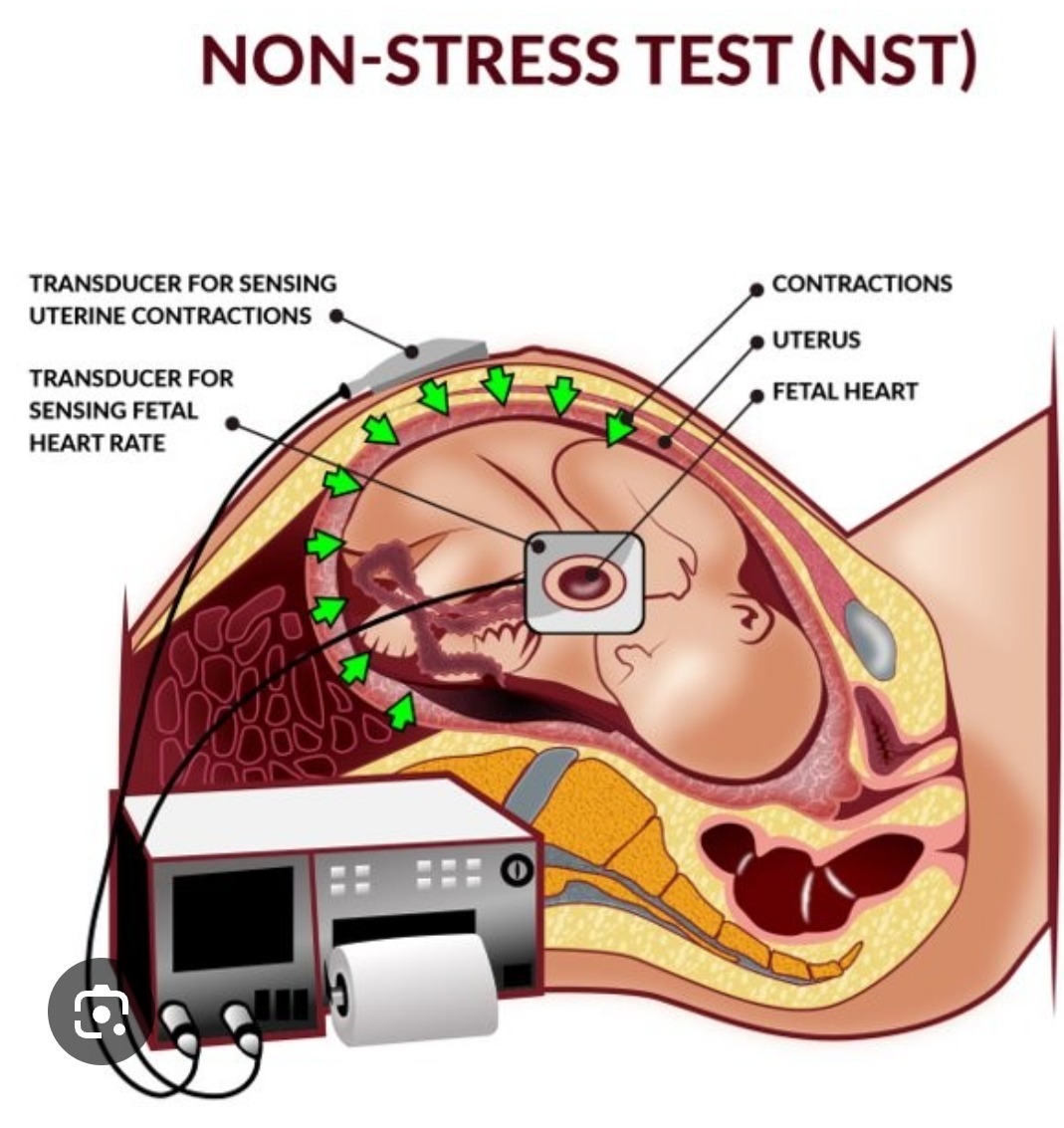
Role of Non-Stress Test (NST) in Pregnancy 1. Assess Fetal Oxygenation and Well-Being NST evaluates fetal heart rate (FHR) patterns in response to fetal movements. A reactive NST suggests adequate fetal oxygenation and intact autonomic nervous system. ✅ 2. Screening Tool for Fetal Hypoxia Early detection of chronic fetal hypoxia in at-risk pregnancies. Helps decide whether further testing or delivery is needed. ✅ 3. Monitoring High-Risk Pregnancies NST is commonly used in conditions such as: Diabetes mellitus Hypertension / preeclampsia Fetal growth restriction (IUGR) Post-term pregnancy (40 weeks) Decreased fetal movements Oligohydramnios Multiple pregnancy Rh isoimmunization ✅ 4. Guide Timing of Delivery Nonreactive NST may prompt: Biophysical profile (BPP) Contraction stress test Early delivery if indicated ✅ 5. Safe and Non-Invasive Monitoring Uses external Doppler; no risk to mother or fetus. Can be repeated frequently. 🩺 Interpretation Reactive NST: accelerations of fetal heart rate (15 bpm for 15 sec) within 20 minutes → Normal / reassuring Nonreactive NST: No adequate accelerations in 40 minutes → requires further evaluation. ⭐ Key Points for Exams NST becomes reliable after 32 weeks (fetal autonomic maturity). First test done in most high-risk pregnancies. Part of biophysical profile.


